
Writing a degree thesis in English
First check whether your university allows the entire thesis to be submitted in English and which parts must remain in the local language.
Read more →Practical guides on academic writing, methodology, bibliographies, formatting, proofreading, presentations and preparing academic materials.
The blog answers common questions and helps with papers, presentations, bibliographies and planning.
Found: 91 / 91 articles.
First check whether your university allows the entire thesis to be submitted in English and which parts must remain in the local language.
Read more →
A completed thesis audit is individually quoted. See what is checked, how it differs from proofreading and which files to send.
Read more →
Choose one legal issue and specify the legal position and period under review.
Read more →
Revisions are quoted after reviewing the file and comments. Learn which notes are minor corrections and which change the scope.
Read more →
A sociology topic needs a defined group, place and phenomenon.
Read more →
An English abstract starts at 69 zł. Compare drafting, translating an existing summary and language proofreading.
Read more →
A scientific poster starts at 99 zł. Learn what poster design covers, which materials to prepare and how printing is priced.
Read more →
A thesis outline starts at 99 zł. See what it should contain and how it differs from a detailed proposal or a table of contents.
Read more →
Questionnaire design starts at 150 zł per service. See what question design includes and why response analysis is priced separately.
Read more →
Text translation starts at 40 zł per page. Learn how to estimate the base price, handle terminology and price an abstract separately.
Read more →
Proofreading an existing bachelor's thesis starts at 10 zł per page. Compare page-count examples and see what to send for a quote.
Read more →
Editing an existing thesis starts at 10 zł per page. See price examples, the scope of editing and how it differs from proofreading.
Read more →
Basic data analysis starts at PLN 150 per service. We explain when a simple scope is enough and when an individual quote is needed.
Read more →
Slides start at PLN 10 each, with a PLN 60 minimum per presentation. Compare 6, 10 and 12 slides and see which tasks need a separate quote.
Read more →
Organising a bibliography and references starts at PLN 10 per page, with a PLN 60 minimum. See examples and the difference between correcting entries and finding sources.
Read more →
Formatting a finished thesis starts at PLN 5 per page. See examples for 40, 60 and 80 pages and find out what to send for a quote.
Read more →
Calculate the cost of a short job at a rate of PLN 35 per page and a minimum of PLN 100 per order. We also show an example of an express quote for today.
Read more →
Captions, automatic list of illustrations and updating of page numbers. See the steps and most common mistakes before submitting your work.
Read more →
Rate from PLN 45 per page with examples for 40, 60 and 80 pages. We explain when volume alone is not sufficient to price the project.
Read more →
Times New Roman 12 and line spacing 1.5 appear frequently, but they are not the same standard for all universities. Check out how to set up a document without any corrections at the end.
Read more →
Base rate PLN 45 per page: examples for 60, 80 and 100 pages, surcharges for deadlines and elements that require separate analysis.
Read more →
Sample ranges of 60-100 pages are not a universal norm. We explain where to look for the right limit and how to plan chapters.
Read more →
Practical outline of the bachelor's degree with aim, questions, method, chapter plan and introductory bibliography. Check what to show the supervisor.
Read more →
Calculate the rate of PLN 40 per page for 30, 40 and 60 pages. See the impact of the deadline and the difference between full coverage and proofreading the finished file.
Read more →
Two original examples of the bachelor's degree layout: research work and case analysis. See how to combine purpose, method and table of contents.
Read more →
See a sample chapter layout for research and design work. Find out what can be taken from the pattern and what needs to be adapted to the topic.
Read more →
Check the base rates for bachelor's, master's and engineering theses and calculations for various volumes and deadlines.
Read more →
There is no single number for all universities. Check out sample ranges, how to count pages, and what to do when the text is too short.
Read more →
We explain the difference between bachelor's, engineer's and master's theses and which elements depend on the university's requirements.
Read more →
How to reduce stress before a defense: preparation plan, presentation rehearsal, response training, breathing, sleep, and a contingency plan for the day of the exam.
Read more →
When to use passive, impersonal and first-person forms in thesis?
Read more →
How to plan writing thesis: decisions supervisor, literature, research, chapters, corrections, formatting and a secure time buffer.
Read more →
Copyright in thesis: the right to quote, drawings, photographs, code, Creative Commons licenses and to document sources.
Read more →
How to analyze a review of work, predict questions about method and results and prepare in-depth responses to supervisor and the committee's comments.
Read more →
How to get rid of pleonasms, unnecessary repetitions, emptiness and unnecessary jargon from thesis without losing scientific accuracy.
Read more →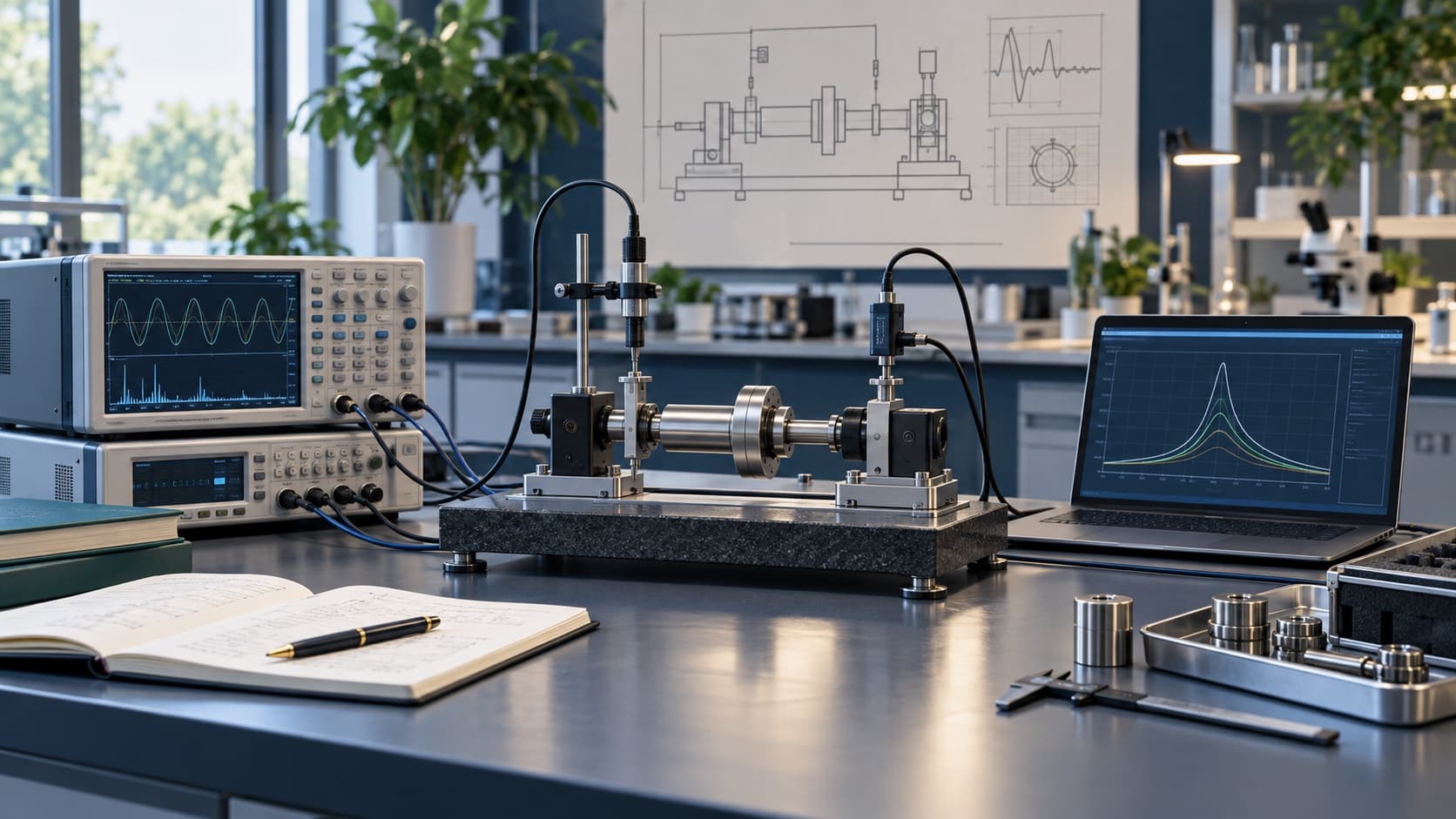
How to describe the apparatus, position and measurement procedure: parameters of devices, calibration, conditions, pattern, uncertainty and repeatability of tests.
Read more →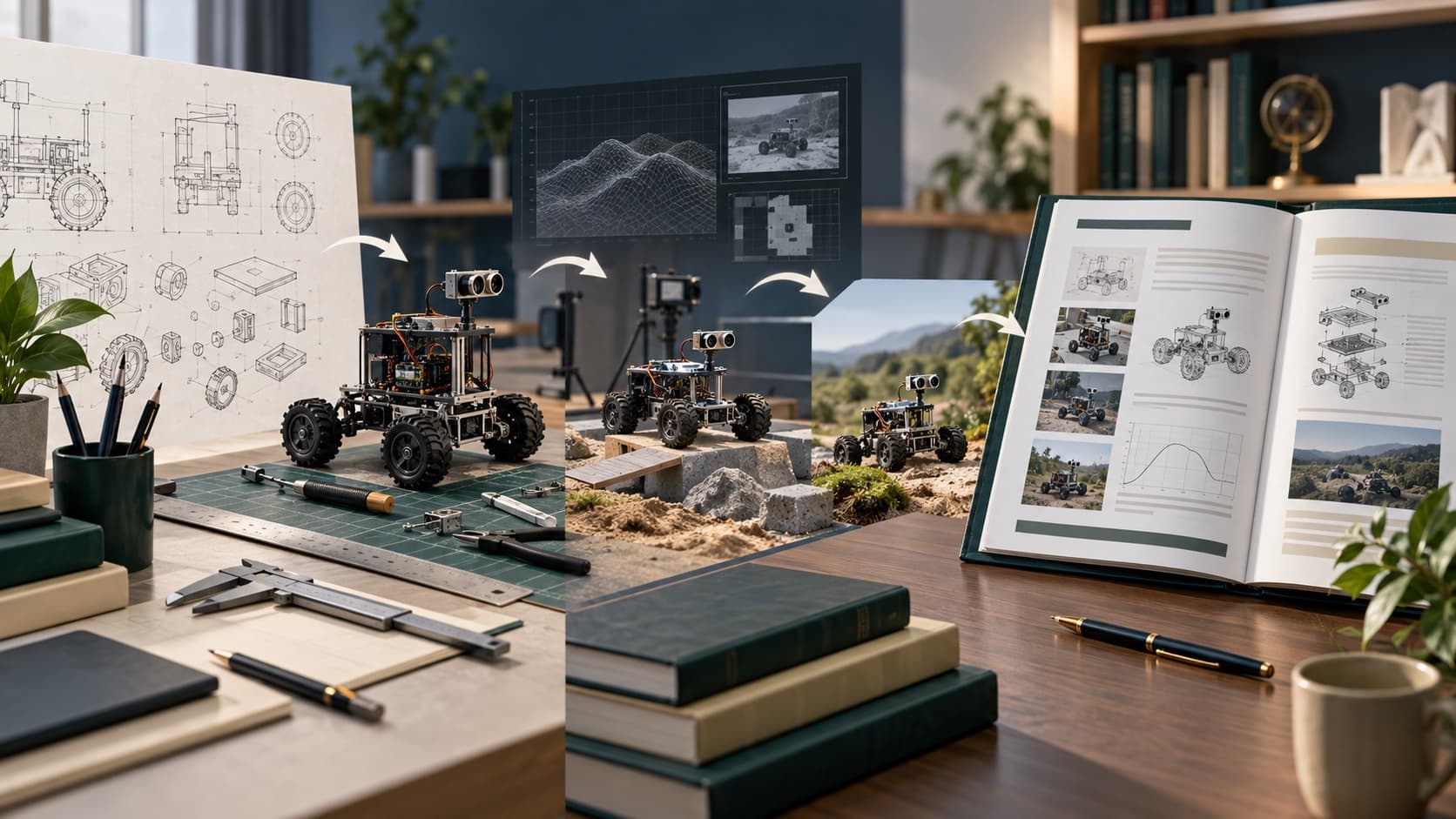
Structure of the design part engineering thesis: requirements, variants, technology, implementation, tests, results, limitations and documentation.
Read more →
How can thesis defense proceed: formals, presentation, committee questions, answers, meeting and announcement of results.
Read more →
Checklist of corrections thesis: spelling, punctuation, composition, terminology, paragraphs, footnotes, tables and check of the final PDF.
Read more →
How can we preserve a scientific style without artificial language? Precision of concepts, paragraph structure, careful inference, consistency of time frames, and examples of corrections.
Read more →
engineering thesis and Bachelor: differences in purpose, practical part, project documentation, methods, results and evaluation criteria.
Read more →
How to arrange the diagrams, calculations, drawings, codes and sheets in the engineering thesis annexes and refer to them correctly in the text.
Read more →
How to collect sources, correct metadata, insert quotes, and generate bibliography in Zotero or Mendeley without typical errors.
Read more →
What is the difference between traditional citations and author-data systems? Comparison of records, bibliography, abbreviations, subsequent citations, and typical errors.
Read more →
How to format engineering thesis: technical drawings, diagrams, code listings, equations, tables, signatures, references and attachments.
Read more →
How to number, sign, and describe tables and charts: data readability, sources, references in text, and the most common editorial errors.
Read more →
How to automatically create a list of content, tables, and drawings in Word: header styles, signatures, references, field updates, and PDF controls.
Read more →
Practical rules for the description of websites, reports, statistics and legal acts: author, title, date, URL, DOI and date of access.
Read more →
Page numbering in Word step by step: section breakdowns, cover-up of page numbers, disconnection of headings, and continuity of numbering.
Read more →
How do you go from a test hypothesis to a test result and a correct conclusion?
Read more →
How to calculate, select and describe the mean, median, quarter and standard deviation in thesis without prescribing tables.
Read more →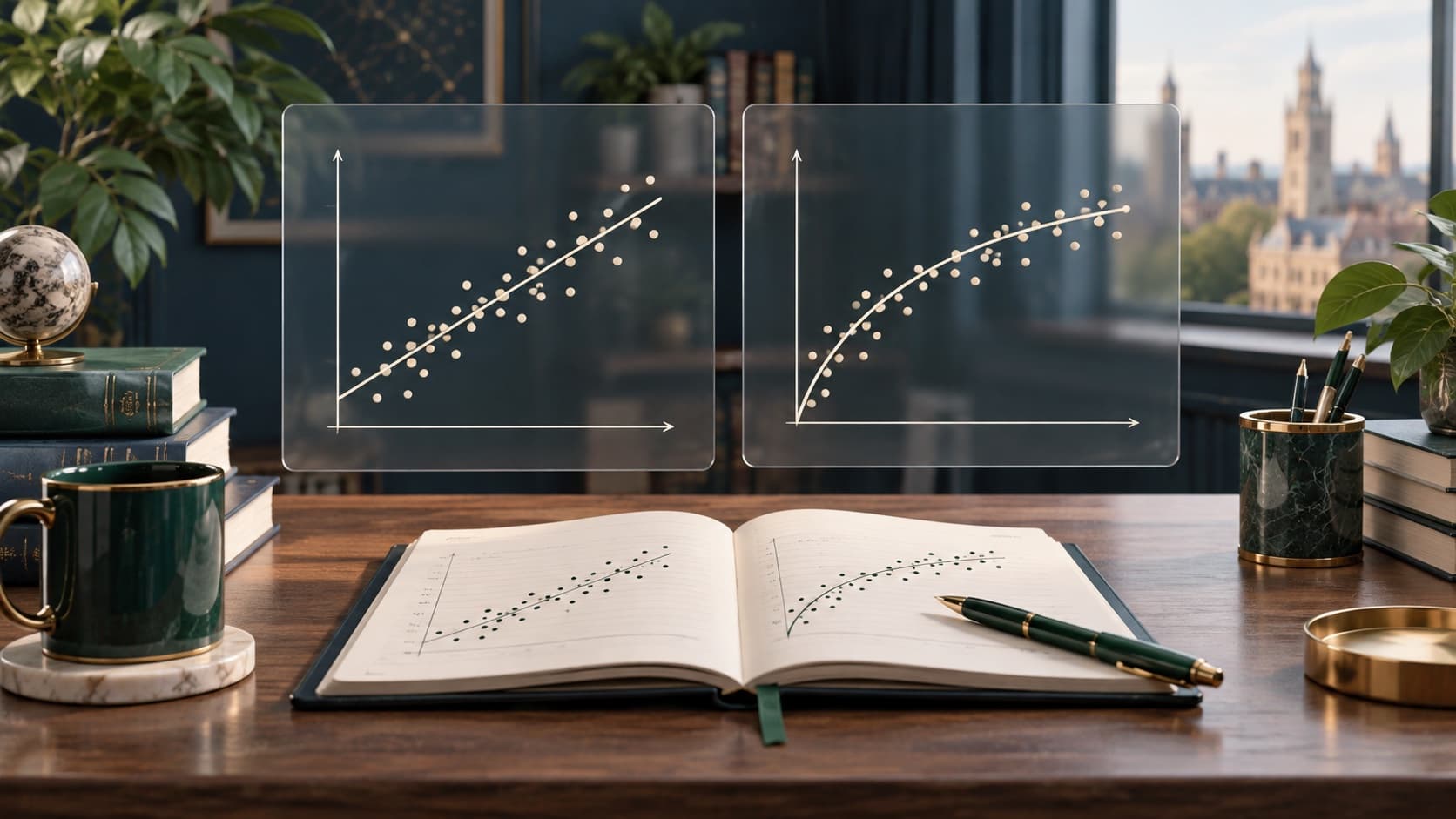
Pearson and Spearman correlation without error: direction, strength of connection, relevance, scatter chart, backward observations and inference constraints.
Read more →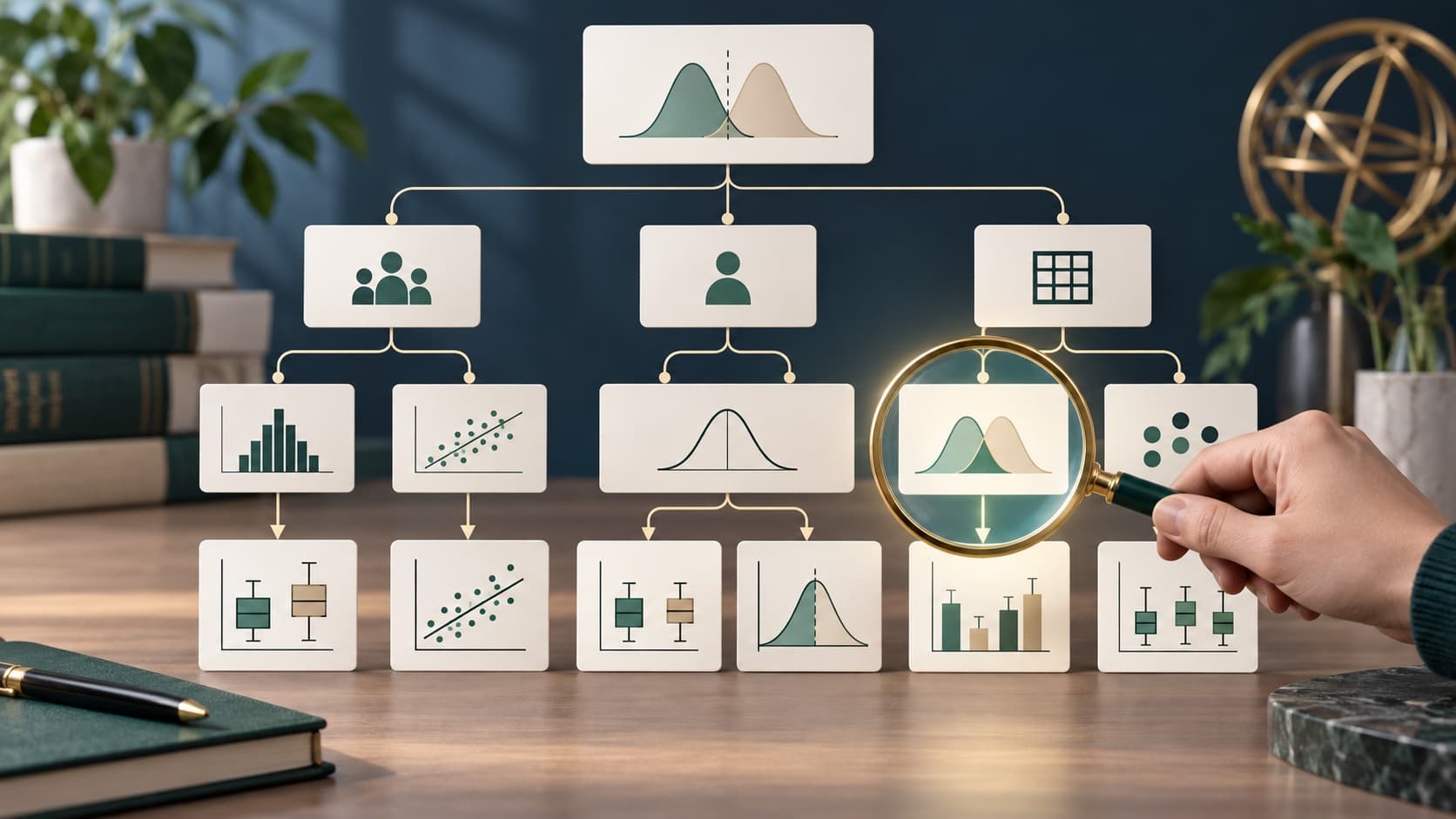
So how do you choose a statistical test for a hypothesis, the type of variables and the test structure?
Read more →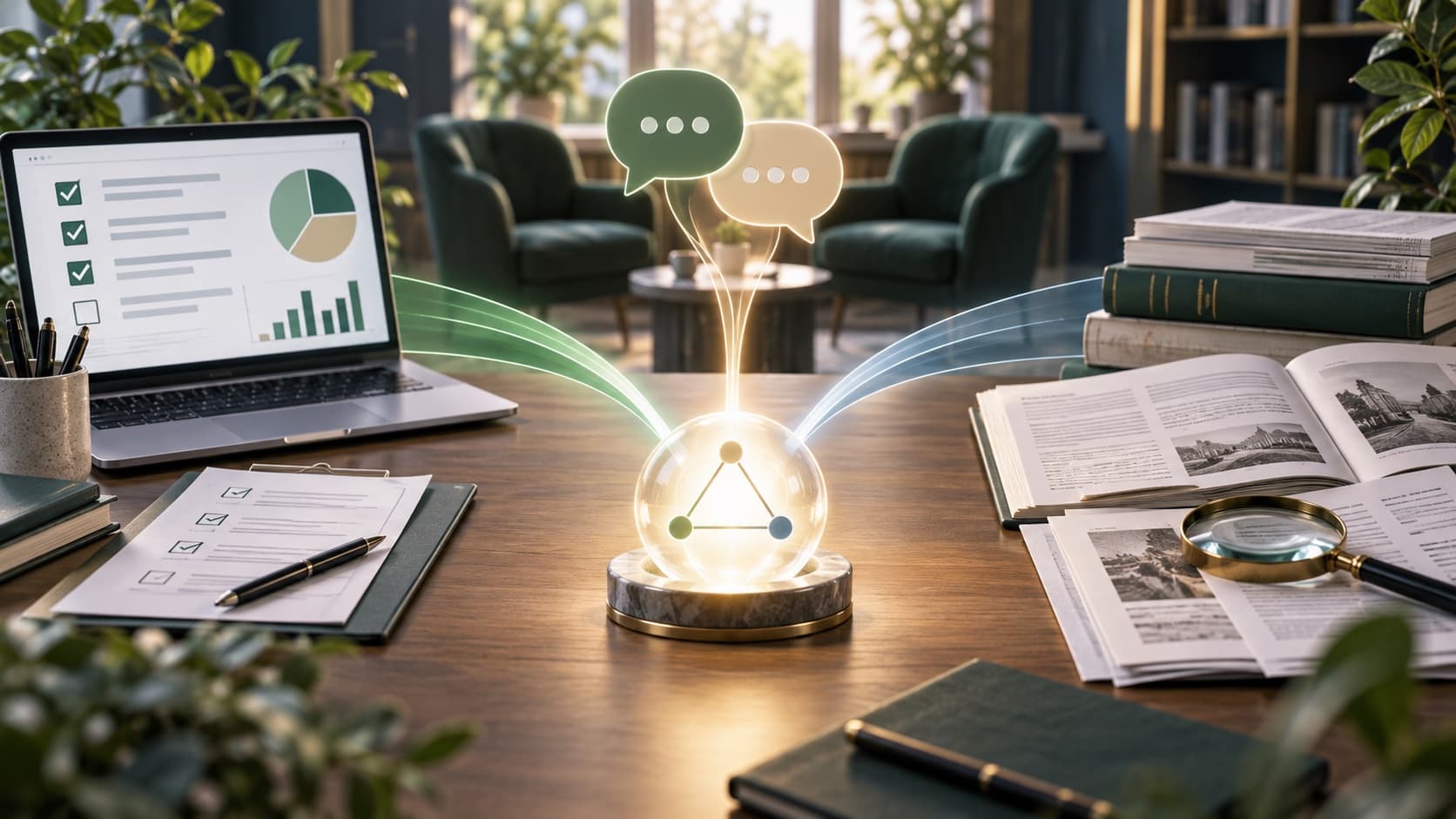
What is the triangulation of data, methods, researchers and theories? How to combine survey, interview and document analysis in master's thesis in a meaningful way.
Read more →
How to conduct an in-depth individual interview: selection of interlocutors, script, consent, recording, transcription, coding and anonymisation.
Read more →
Step by step operationalization: theoretical concept, variable, dimension, indicator, query in the tool and data analysis plan.
Read more →
How to plan the scope of the theory, methodology, results and discussions?
Read more →
Review of the literature step by step: review question, scientific basis, selection criteria, notes, synthesis and identification of research gaps.
Read more →
Quantitative or qualitative studies: comparison of objectives, tests, tools, data analysis and the way conclusions are formulated in thesis.
Read more →
How do you select a sample, describe a population, and justify the number of respondents?
Read more →
A four-week plan for completing your master's thesis: materials audit, priorities, chapter writing, research, revisions, and a buffer before submission.
Read more →
Action plan when the supervisor does not respond: polite reminder, documenting the arrangements, contacting the university and working on the material without wasting time.
Read more →
What the JSA report really shows, why percentages alone do not determine plagiarism, and how to review marked fragments before talking to your supervisor.
Read more →
A practical comparison of proofreading, editing, formatting and work auditing. Check what scope corresponds to the problems in your document.
Read more →
What determines the price of proofreading a master's thesis, how to compare estimates and what to send to immediately receive a reliable cost and deadline.
Read more →
What questions to expect during the defense and how to prepare short, factual answers about the purpose, method, results, literature and limitations of the work.
Read more →
From the analysis of the project order and goal to the action plan, schedule, budget, results, presentation and final report.
Read more →
Structure of an academic case study: case selection, data, context, problem diagnosis, analysis of variants, recommendations and limitations.
Read more →
Thesis, arguments, structure, sources and style of an academic essay. A practical writing scheme and a list of mistakes to avoid.
Read more →
How to organize the supervisor's comments, plan corrections and safely change the structure, methodology, footnotes and formatting of the document.
Read more →
Footnotes step by step: first and subsequent citations, book, article, chapter, website and automatic numbering in Word.
Read more →
APA 7 Key Principles: In-text citations, books, articles, websites, DOIs, multiple authors, and bibliography control.
Read more →
From cleaning answers and coding questions to pivot tables, percentages, charts and description of survey results in the diploma thesis.
Read more →
Structure of the research chapter: purpose, problem, questions, method, sample, results, discussion and conclusions. A practical scheme without chaos and repetition.
Read more →
A complete plan for a bachelor's thesis: from the selection of the topic and outline, through literature and research, to proofreading, formatting and preparation for defense.
Read more →
Google Scholar, catalogs and scientific databases in practice: keywords, source evaluation, citation tracking and literature review organization.
Read more →
Practical test of a good topic: interests, literature, access to data, scope, method and preparation of a proposal for the promoter.
Read more →
Plagiarism, paraphrase, quotation and footnote in practice: how to honestly use sources and control the text before submitting the work.
Read more →
Summary and abstract step by step: purpose, method, results, conclusions, keywords and preparation of the English version.
Read more →
Completion of a bachelor's or master's thesis: answer to the goal and questions, most important conclusions, limitations and directions for further research.
Read more →
A practical Word guide: styles, margins, line spacing, page numbering, table of contents, signatures, footnotes and safe export to PDF.
Read more →
How to organize the results of a survey or interviews, select tables and charts, describe relationships and separate the result from the interpretation.
Read more →
From research questions to a ready-made questionnaire: types of questions, response scales, specifications, piloting and data collection.
Read more →
Practical rules for creating the main problem, detailed questions and hypotheses that can be tested in a diploma thesis.
Read more →
Introduction to a bachelor's or master's thesis step by step: justification of the topic, purpose, scope, methods, structure and the most common errors.
Read more →
A practical way to create a bachelor's or master's thesis plan: from the goal and research problem to logical chapters, methodology and schedule.
Read more →
Complete check of the work before sending: content, formatting, footnotes, bibliography, charts, attachments and the final PDF file.
Read more →
Research methodology without generalities: purpose, problems, questions, hypotheses, method selection, sample, data analysis, ethics and limitations.
Read more →
Ready-made presentation layout for the defense: number of slides, results, charts, speaking time, committee questions and emergency plan.
Read more →
Practical rules for notating books, articles and websites, checking compliance with footnotes and tips for APA, Zotero and Mendeley.
Read more →
From the chapter plan and selection of literature to coherent paragraphs and the combination of theory and research. A specific guide for bachelor's and master's theses.
Read more →The blog covers work organisation, outlines, methodology, research results, bibliographies, formatting, proofreading and defence preparation.
If a guide does not answer your question, send an enquiry describing the situation and attach materials for a quote.
Send enquiry →The calculator quickly shows the estimated service cost and available payment options.