Key information
- ✓Choose one legal issue and specify the legal position and period under review.
- ✓For a selected type of contract clause, compare the relevant provisions with specific judgments and their facts.
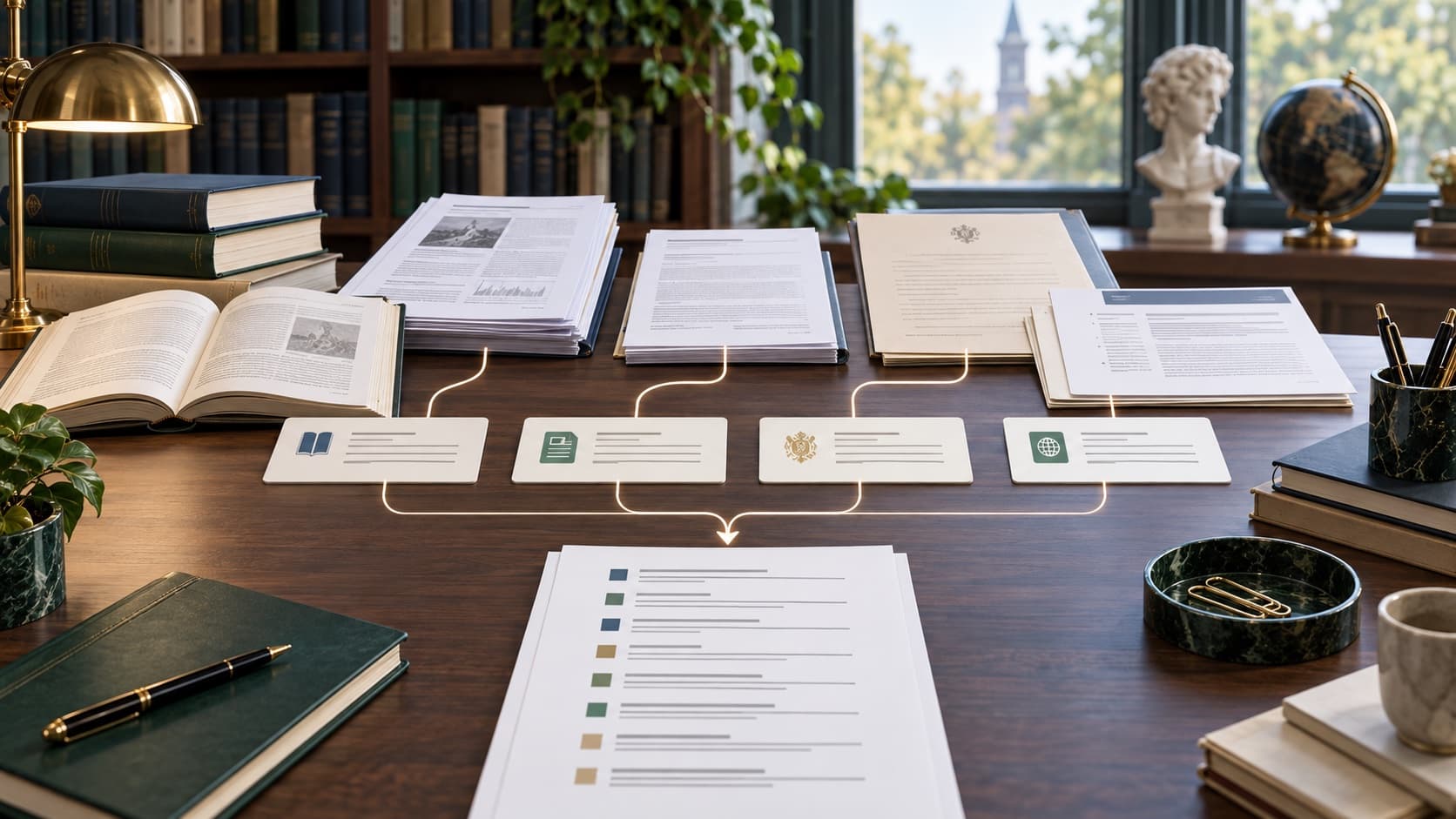
- ✓Trace each claim from the aim to results: it should rest on material, a calculation or a correctly identified source.
What does this topic cover?
Before finalising a topic, confirm access to sources, data and someone who can clarify programme requirements. An overly broad title makes method selection and conclusions harder.
You can request support at one stage, chapter editing or revisions following a supervisor consultation.
A practical example
For a selected type of contract clause, compare the relevant provisions with specific judgments and their facts. Do not derive a universal rule from a single decision.
An example can be transferred to another institution only after adjusting data, context and assessment criteria. Your own paper should discuss material you really have and may use.
How do you narrow a topic in your subject?
Define the object, setting, period and material. A topic covering an entire industry or profession often needs data a student cannot obtain. A narrower question makes it possible to choose sources and a method and defend the conclusions.
Before settling on a title, test it: find several reliable sources and check access to data, documents or participants. If material is missing, change the scope rather than promise an analysis you cannot carry out.
How do you build an argument from evidence?
Separate definitions and previous findings from your own results. Each chapter should do a different job: introduce concepts, justify the method, present material or interpret a result. Avoid repeating the same description in the theory and results chapters.
For each important claim, record its basis: a verifiable publication, a provision valid in the period studied, a document, a calculation or a research result. If the basis is uncertain, qualify the claim or mark it for verification.
How can you prepare the work for review?
Check that the aim, method, findings and conclusion answer the same question. Readers should understand why the material was chosen and where the conclusions stop. In a design project, also show assumptions, implementation and how the solution was tested.
Before submission, compare the text with your programme's requirements. Source format, tables, figures, appendices and specialist terms can differ. Ask your supervisor where the instructions allow more than one approach.
How can the topic become a chapter plan?
Write a working title, the main question and three things readers must know to understand the answer. Build chapters from those points, then assign sources, data, figures or calculations to each part. This prevents the text becoming a collection of unrelated definitions.
After the first draft, check that examples and conclusions concern the same object, period and country promised in the introduction. If sources describe different conditions, explain the difference. Do not transfer findings from one group, institution or legal system to another without justification.
How should you check your work?
Trace each claim from the aim to results: it should rest on material, a calculation or a correctly identified source. Mark points needing subject-specific advice.
The final structure, method and formal requirements must follow your university's current guidance and your agreement with your supervisor.
Summary
Choose one legal issue and specify the legal position and period under review. The final structure, method and formal requirements must follow your university's current guidance and your agreement with your supervisor.
Frequently asked questions
Where should you start?
Choose one legal issue and specify the legal position and period under review. Distinguish statutory text, scholarly interpretations and conclusions from judgments; date any legislative change. Before finalising a topic, confirm access to sources, data and someone who can clarify programme requirements. An overly broad title makes method selection and conclusions harder.
What would a concrete example look like?
For a selected type of contract clause, compare the relevant provisions with specific judgments and their facts. Do not derive a universal rule from a single decision.
What should you check before submission?
Trace each claim from the aim to results: it should rest on material, a calculation or a correctly identified source. Mark points needing subject-specific advice.
Need support with your work?
Describe the topic, scope and deadline. We will review the materials, recommend the right support and prepare a clear quote.