Copyright in a thesis: quotations, images and licences
A source is necessary, but not always sufficient, for the legitimate use of a work. Other rules apply to a short quote discussed in the text, and other rules apply to the acquisition of the entire graphic, photograph, questionnaire or code fragment.
Key information
- ✓Always indicate the author and the source of the material used.
- ✓Check the license before copying the entire graphics or tool.
- ✓Don't assume that everything on the Internet is free to use.
- ✓Document the consent or terms of the licence.
Citation and its function
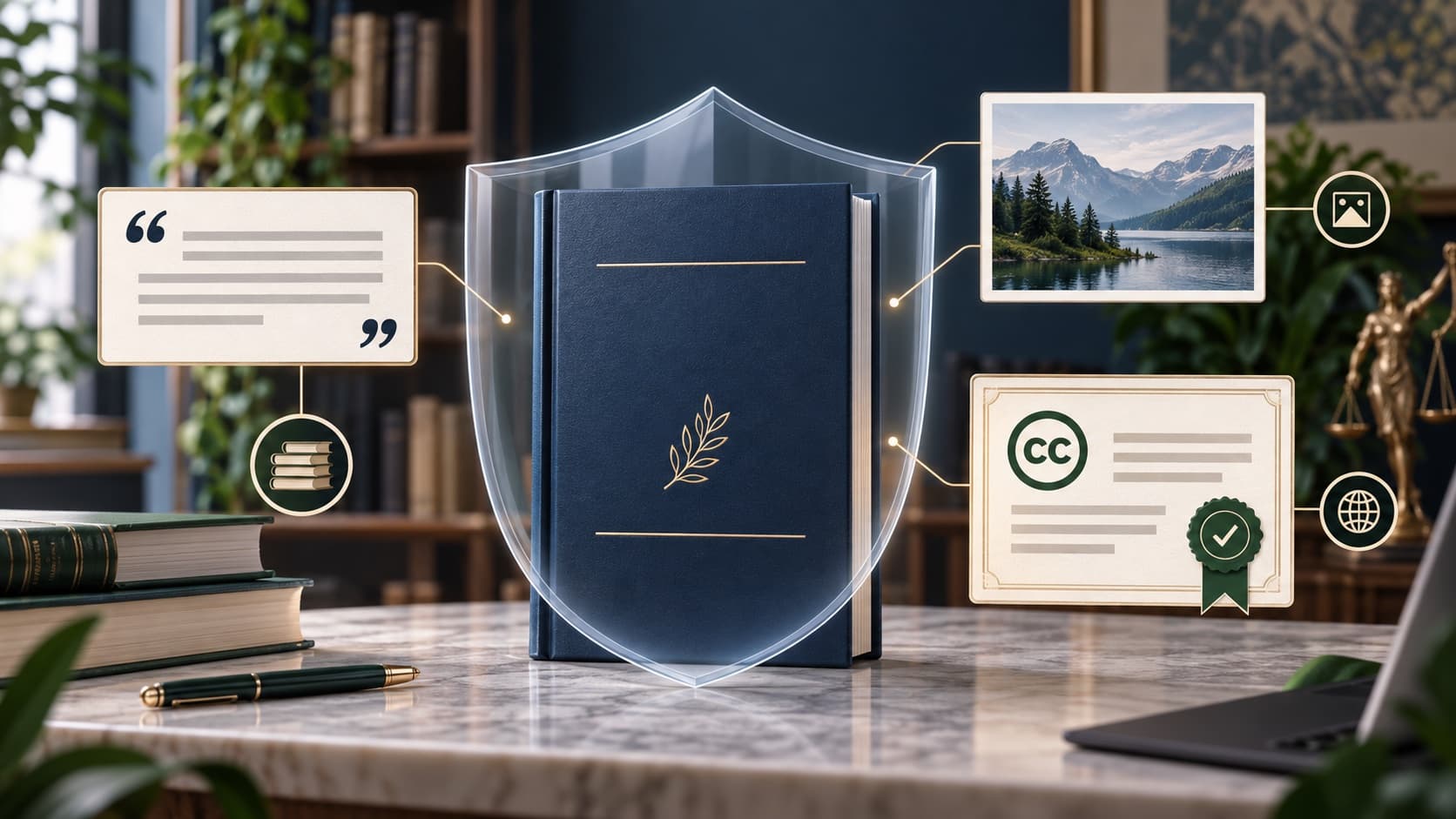
A quotation should be recognisable, be sourced, and be used for analysis, explanation or argumentation; it should not be a substitute for self-development; the scope of the quotation should be proportionate to the purpose of its use.
Drawings, tables and photographs
The entire graphic element can be a separate piece. Check whether it is under an open license, whether consent can be obtained, or whether the use is subject to the appropriate exception.
Creative Commons and open source
Read the exact version of the license: some require the author and link, others restrict modification or commercial use.
Code, tools and data
The repository may have a license setting out the rules for using the code, questionnaires and databases may also be subject to restrictions, and describe the source, scope of changes and how to access the work without disclosing confidential data.
Summary
The safe use of the material requires the determination of the author, legal status, license and purpose of use.
Frequently asked questions
Does signing the source allow you to copy any photo?
No, the author's description is not a substitute for the legal basis for the use.
Need support with your work?
Describe the topic, scope and deadline. We will review the materials, recommend the right support and prepare a clear quote.